

What is a TPM? And here's why you need it for Windows 11
What is a TPM? And here's why y'all need information technology for Windows xi
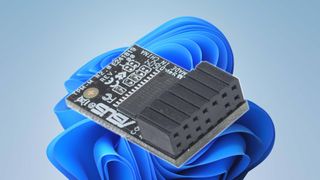
It was merely after Microsoft had finished its Windows 11 unveil earlier this summertime that the company released organization requirements for its software update. And buried underneath RAM recommendations and recommended gigahertz (GHz), was a curious acronym: TPM.
Trusted Platform Module, or TPM, is a secure cryptoprocessor that secures a figurer via an integrated cryptographic key. But in more bones terms, it'due south like a security warning for your computer to prevent hackers or malware from accessing data. And it volition be necessary for Windows 11, which arrives this week. (Check our our Windows 11 review for our impressions of this software update.)
Unfortunately, it seems that some older hardware will exist excluded from the Windows 11 update. Microsoft confirmed as much, maxim that while the situation "sucks," information technology's to ensure a more secure Windows experience moving forward.
- Windows xi vs Windows x: Here's everything that's new
- The all-time laptops right now
- Plus: Y'all tin can actually upgrade to Windows xi without a TPM — here'southward how
What is a TPM and how does information technology work?
There'southward software security and hardware security. Software security, when washed well, is an constructive means of preventing hackers from entering a arrangement. But considering software is more malleable by nature — its code that tin can be modified — there's always a chance that a sophisticated hacker or an exploit tin be found, giving intruders the ability to access sensitive information.
Hardware security, equally the name implies, is hardcoded. The cryptographic keys are impossible to modify unless the hacker somehow knows exactly what those keys are in accelerate.
"PCs of the future demand this modernistic hardware root-of-trust to help protect from both common and sophisticated attacks similar ransomware and more sophisticated attacks from nation-states," said David Weston, director of enterprise and OS security at Microsoft in a blog post. "Requiring the TPM 2.0 elevates the standard for hardware security by requiring that built-in root-of-trust."
The TPM bit communicates with other security systems within a PC. Whether it exist a fingerprint reader or Windows Hi facial recognition, it all has to confer with the TPM to allow users access.
And information technology's not just your security systems that will utilize a TPM, so practise programs similar Outlook, Firefox and Chrome.
Does my computer have TPM?
There are a few means to check if your electric current auto has a TPM. The easiest fashion is to go to the Beginning menu, search for Windows Security, and click on Device Security on the left-hand column. There, another window volition appear that shows if your device has a TPM installed. It should say Security processor, with a footling green checkmark next to the icon. If that Security processor icon isn't at that place, and then you do non take a TPM installed.
Scroll through the gallery beneath to see all the steps.
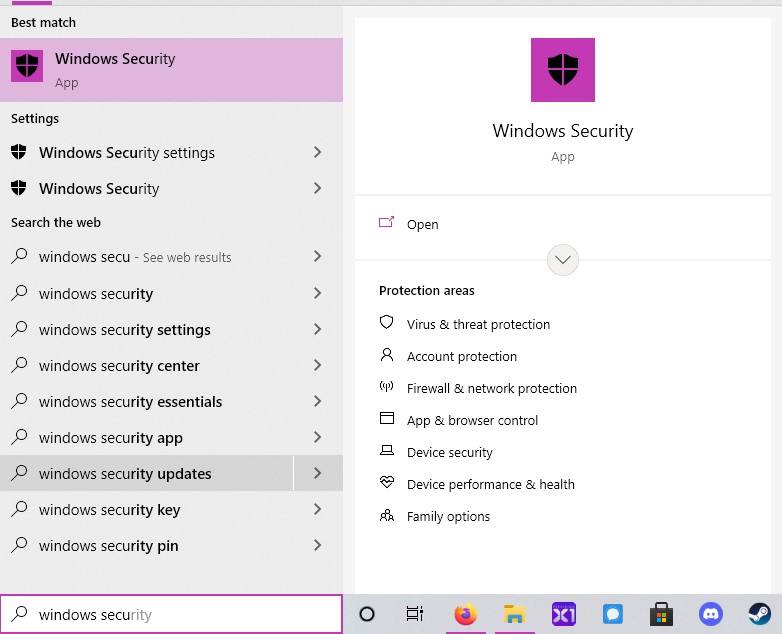
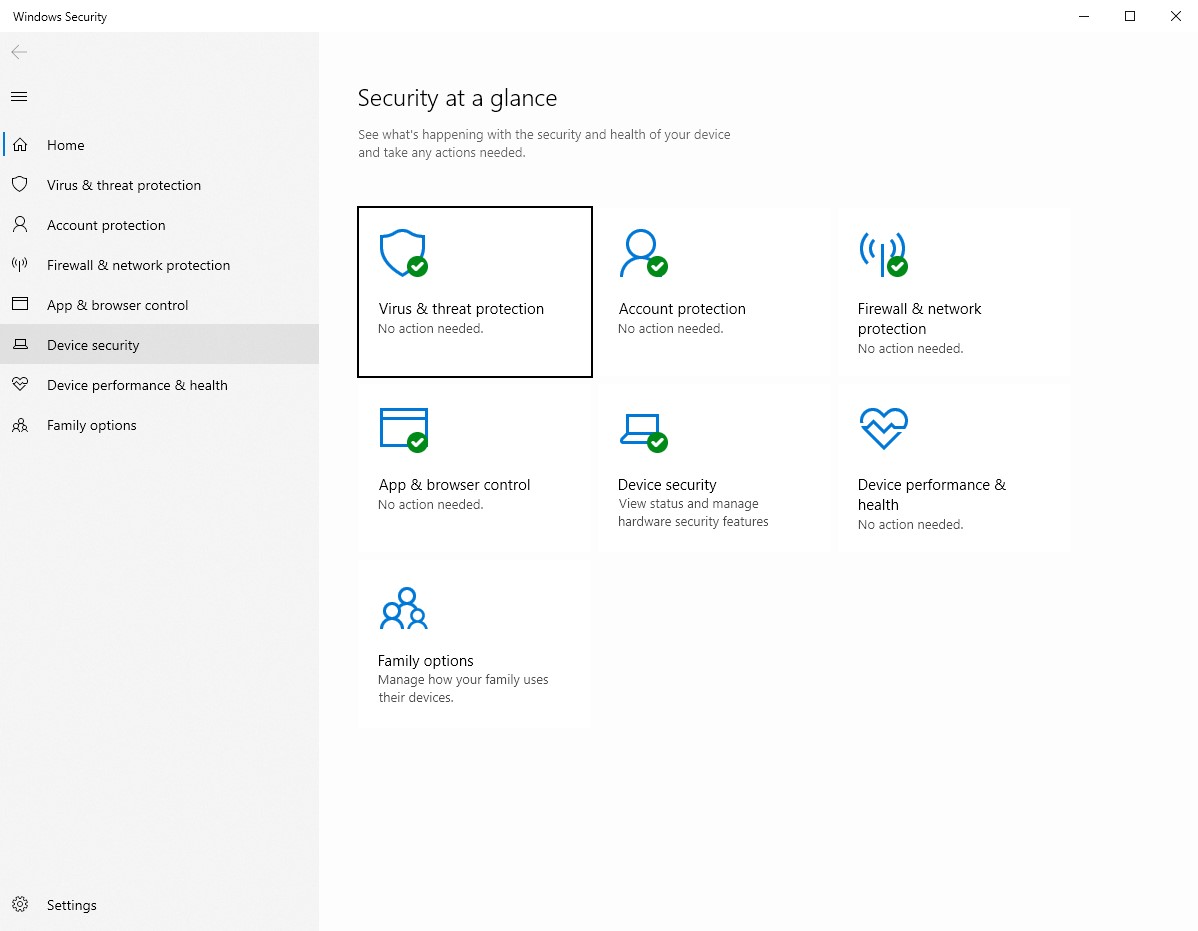
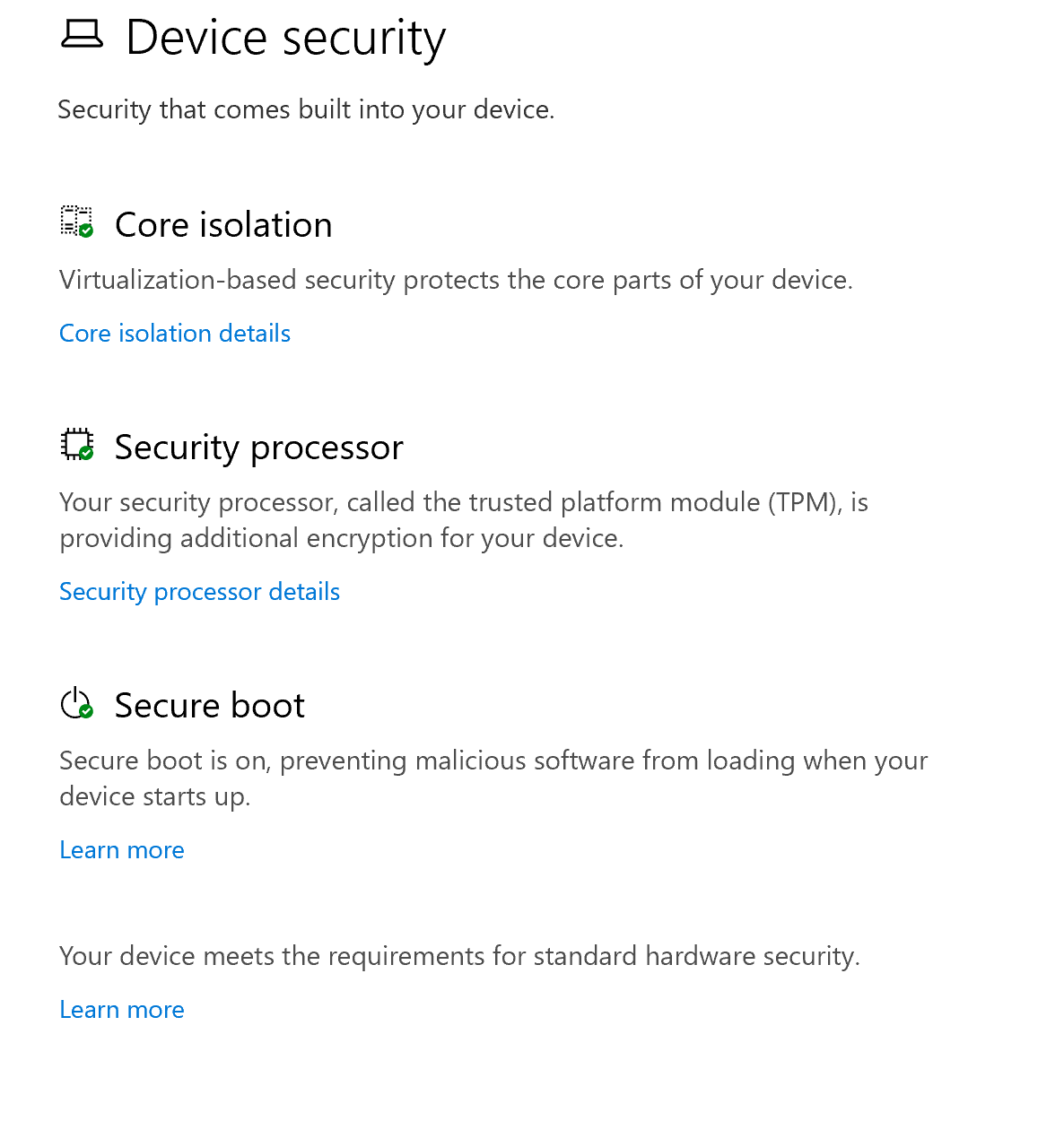
If you lot come across nothing, another way to quickly check if at that place's a TPM installed is to type Run into the Start search bar, and then type in tpm.msc and hit Enter.
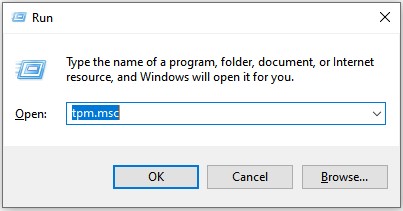
That should bring up the Trusted Platform Module (TPM) Management on Local Computer window. If it says "Compatible TPM cannot be constitute" then either your estimator doesn't have a TPM, or has TPM 1.2, but is not enabled in the BIOS.
Unfortunately, fifty-fifty if yous are able to enable TPM ane.2 in the BIOS, Windows eleven actually requires TPM 2.0.
A final manner to check is to download the PC Health Cheque app from Microsoft. Later installation, the programme will tell you if your computer is ready for Windows 11.
What to do if you don't have TPM 2.0
For desktop users that may not have TPM 2.0, one way to add together the functionality is to buy a compatible module for your motherboard. This volition require you to search for your motherboard model and see if the manufacturer ever released a compatible TPM.
As well, information technology seems that prices for TPMs take increased since the Windows 11 unveiling. An Asus TPM, which sold for $14 on Amazon, has, as of this publishing, sold out and is selling for more than $40 on the used market place. Some manufacturers have also stopped product of TPMs, but it's likely that production may beginning up once more given the recent surge in demand.
If you lot are able to procure a compatible module, all y'all take to do is find the TPM pins on your motherboard and stick it in. Recollect to go into the BIOS menu and enable information technology every bit well.
Now, if you take a more modern CPU, i built later on 2014, at that place'south a chance that TPM already exists. Modern CPUs incorporate TPM via firmware. Intel uses Platform Trust Technology (PTT) while AMD Ryzen chips utilize fTPM.
Steps to enable this in BIOS will vary based on manufacturer. But it generally will crave users to restart their PC and press the Delete cardinal repeatedly until the BIOS menu appears. From there, users might need to go into more advanced menus to observe the TPM selector. From there, firmware TPM tin can be enabled.
Note that there's an open-source script out there that bypasses the TPM check, so that you can force-install Windows 11 on your computer without a TPM. But it's risky, and Microsoft has said that, should you force-install Windows xi, you will no longer receive updates and future back up.
- More: Windows eleven Android apps — be prepared for disappointment
- Apple should re-create these Windows eleven features for macOS
- How to check Windows xi compatibility if PC Health Check doesn't work

Source: https://www.tomsguide.com/news/what-is-a-tpm-and-heres-why-you-need-it-for-windows-11
Posted by: smithteaks1996.blogspot.com
0 Response to "What is a TPM? And here's why you need it for Windows 11"
Post a Comment